


- Home
- >
News
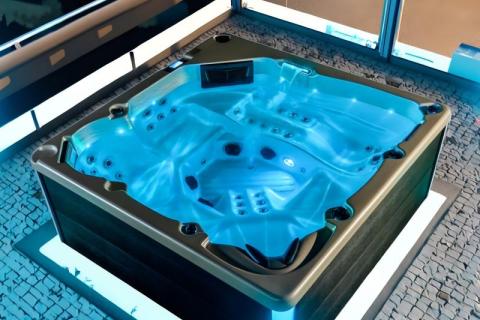
Through OEM/ODM customization capabilities, a large-scale production system, and international market certification experience, LOVIA provides outdoor spa solutions that better meet the actual operational needs of commercial projects such as hotels, resorts, and wellness centers.
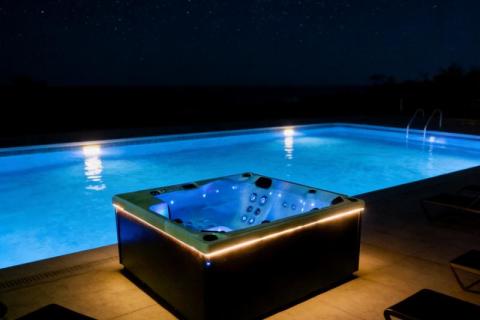
The CDC points out that prolonged contact with contaminated hot water on the skin can lead to a so-called "hot tub rash," also known as Pseudomonas folliculitis. Common symptoms include itching, red papules, and pustules around hair follicles, and these may be more noticeable in areas covered by swimwear.

What happens if soap gets into an outdoor hot tub? The most obvious phenomenon is usually increased foaming. Previously clear water may quickly produce a large amount of white foam after the nozzles, aeration system, or circulation pump are turned on, and this foam doesn't disappear as quickly as bubbles in normal clear water.

Outdoor hot tubs are not just spa equipment, but also a business tool integrating leisure, social interaction, health management, and a high-end lifestyle. By strategically planning the Outdoor Hot Tub area, wellness centers can enhance customer experience, increase member loyalty, and create new profit models.

Increasing the chlorine concentration indefinitely is not recommended as a solution. For existing biofilms, physical cleaning is usually very important. The CDC's maintenance guidelines for hot bathtubs explicitly require removing the slime layer through scrubbing and cleaning, in conjunction with filter and circulation system maintenance.

This article will provide a detailed overview of key considerations before purchasing an Outdoor Swim Spa, covering aspects such as size selection, core configuration, energy efficiency, manufacturing process, installation environment, and after-sales service.

The U.S. Consumer Product Safety Commission (CPSC) has long listed "alcohol + hot tub" as a combination to be wary of, explicitly warning consumers that drinking alcohol while using a spa, hot tub, or whelping pool can lead to drowning; it also recommends that hot tub water temperature should not exceed 104°F, or 40°C.
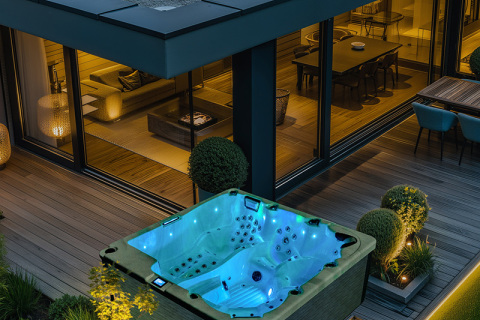
As a professional outdoor spa equipment manufacturer, LOVIA® has long focused on the research and development and production of products such as Spa Hot Tub, Swim Spa, and Cold Plunge Tub. Our factory has a monthly production capacity of approximately 1200 outdoor hot tubs.
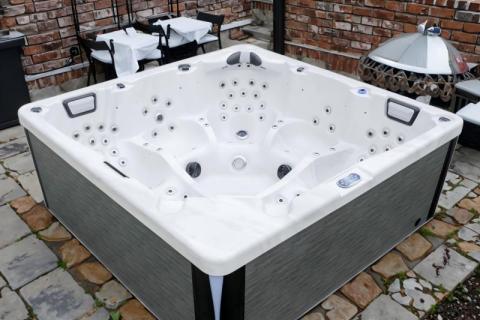
Do not use "a few days after suturing" as the sole basis for entering an outdoor hot tub before your doctor explicitly allows it. Generally, you should wait until the wound is completely closed, there is no oozing or bleeding, no obvious signs of redness and infection, and the treating physician confirms that soaking is safe before resuming bathing.
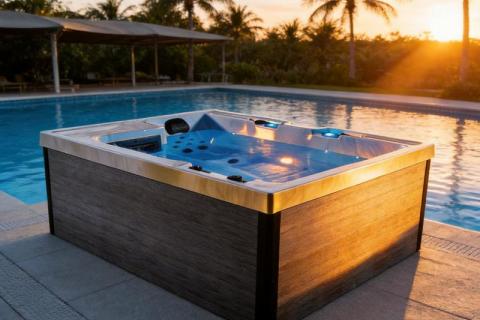
The most reliable method is not to observe whether the water is clear, nor to guess based on the amount of foam, but rather to test the calcium hardness and make a comprehensive judgment based on pH, total alkalinity, water temperature, and the target range recommended by the equipment manufacturer.
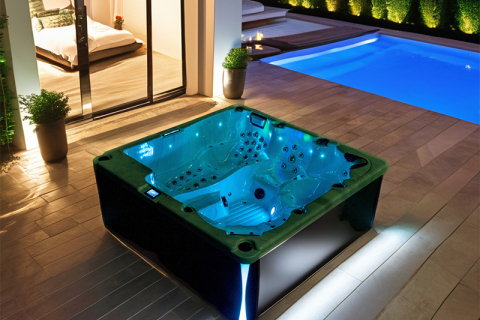
Currently, the most convenient home testing method is to use an electronic TDS meter. TDS meters typically measure the conductivity or related electrical properties of water and then estimate the total dissolved solids concentration based on the instrument's internal conversion factor.
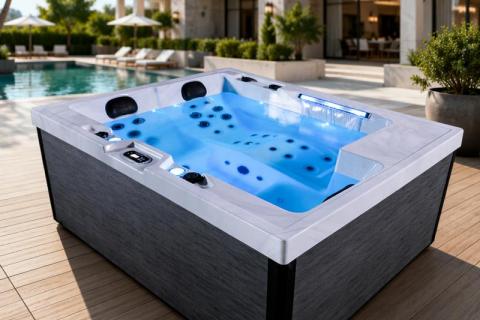
Most outdoor spa hot tubs currently employ a "circulating filtration + water quality management" system. The system uses a pump to draw water from inside the tub into the filtration system, where it is filtered and then returned to the tub, maintaining a relatively clean water level.