


- Home
- >
News
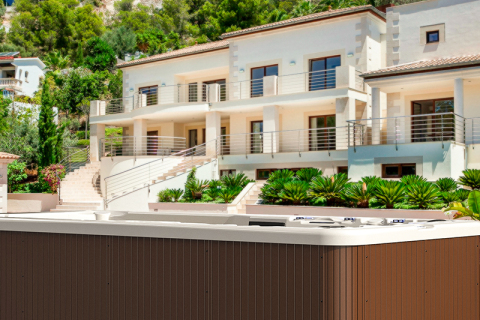
In reality, the vast majority of cases where outdoor swim spa water turns green are linked to algae proliferation, sanitizer failure, chemical imbalances, and the accumulation of contaminants. Rainwater often acts merely as a "trigger" for the problem rather than the root cause.
The design philosophy for most swim spa tubs focuses on "removal and cleaning" rather than "backwashing." In other words, when the filter becomes dirty, the user typically needs to remove the cartridge and clean it manually. This explains why you won't find a backwash button or valve on many swim spas.

In swim spa tubs, the algaecidal capability of sanitizers (especially chlorine) is directly linked to pH levels. If the pH is outside the ideal range, the actual disinfecting power drops drastically, even with high-intensity shock treatment.
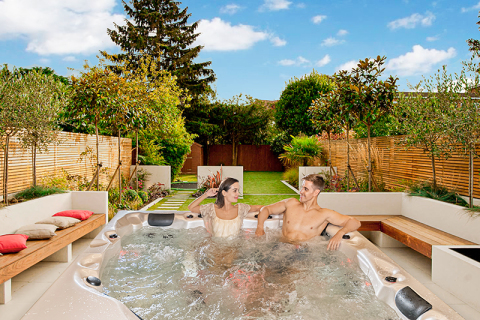
From a professional standpoint, swimming in a swim spa tub with insufficient or no free chlorine is generally considered unsafe. If free chlorine levels are too low, the swim spa may not be thoroughly disinfected, thereby increasing the risk of infection or waterborne diseases.
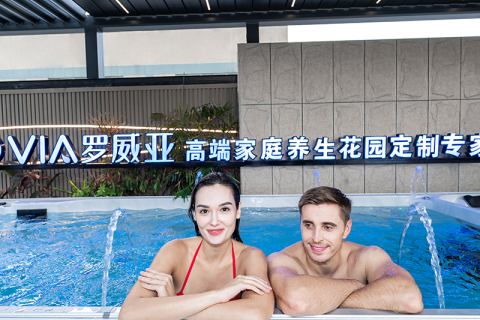
If the water quality is initially good, a swim spa tub typically won't turn green immediately after three days. However, in high-temperature environments or situations with insufficient sanitizer, the growth of algae and microorganisms accelerates significantly.

In the case of light rainfall: •The volume of rainwater entering the swim spa is limited. •Changes in sanitizer concentration are typically minor. •Fluctuations in the water's chemical balance are relatively small. If the swim spa's existing sanitizer levels are stable at that time, additional sanitization may not be required after every light shower.

In a swim spa, algae typically manifests in two forms: The logical approach is as follows: 1.First, use a brush to scrub the walls, floor, and corners. 2.Allow the adhered algae to detach from the surfaces. 3.Then, use a vacuum cleaner to remove the dislodged algae and debris.
Yes, it is absolutely mandatory—and critically important. When performing shock disinfection on a swim spa, the role of the filtration system extends far beyond the simple task of "filtering out impurities". If the filtration system is not running, the effectiveness of the shock disinfection will be significantly compromised.
Liquid chlorine is widely considered an ideal shock agent for algae control, primarily due to the following reasons: • Fast action: Its liquid form disperses more quickly. • Strong oxidizing power: It can rapidly destroy algal cells. • No added burden: It does not add cyanuric acid (CYA) or calcium to the water. This is especially important for swim spa tubs.

Many people intuitively believe that the sunlight is strongest at noon, so the swim spa tub water temperature should be the highest, but this is not the case. Tthe water temperature in a swim spa tub tends to reach a relatively high value between 1 PM and 4 PM, rather than peaking immediately at midday.
Yes, but not the only reason. If the swim spa tub filter cartridge: • is clogged with grease and fine particles • the filter pores are filled with contaminants In this case, particles in the water will remain suspended, making the swim spa tub appear cloudy.
If your swim spa tub remains green after shock disinfection, the most common and fundamental reason is algae. Algae have the following characteristics: • They can multiply rapidly in warm, slow-moving environments • After being killed by disinfectants, they do not immediately "disappear" from the water